Vision of Work
The possibilities for what the Liberty Hyde Bailey Center might accomplish, as a platform for connecting across perceived difference and strengthening democracy and planetary climate together, are vast. Here are ten initiatives we imagine engaging in our first decade.
Jump to: The Rural-Urban Dialogue Initiative | Whole Earth Democracy Series | Carriage House Residencies | Liberty Gardens and Greenhouse Program | Rural Humanities Project | Property Tours and Restoration | Bailey Center Bookshop and Reading Room | Agrarian Away Program | Nature-Study at Bailiwick | Bailey Block Party
The Rural-Urban Dialogue Initiative
In our first five years, the Liberty Hyde Bailey Center will be the home base in Ithaca for this signature statewide initiative, led by a dedicated staff person. Working alongside invited partners in Cornell University’s Ashley School of Global Development and the Environment and Brooks School of Public Policy; in Cornell Cooperative Extension, with its independent offices in every county of New York State; in the State Legislature; and among independent rural organizations and a number of other potential partners, including the New York Commissioner of Agriculture, we will convene dozens of dialogues in rural areas each summer that bring diverse groups of rural and urban citizens together for structured dialogues focused on a given topic of urgent interest across regional lines. These small groups will then bring their reports to an annual statewide summit in the fall, where these emerging rural-urban communities of interest from across the state will share their findings, deliberate, and help set the agenda for next year’s dialogues. The goal will not be unanimity, but understanding, which will be the basis for real coalition-building across perceived lines of difference. This process, successfully pioneered in the 1980s and 1990s by the Minnesota Food Association, will not only identify important future work for the Bailey Center, the State, and citizen groups across New York, but will also surface the leadership and talent that will push that work forward. It will immediately begin to address the current crisis of communication across the rural-urban divide, and through the work that emanates from the dialogues, the initiative will benefit thousands of New Yorkers. It will, further, seek to inspire and provide resources for similar efforts in states across the country.
Whole Earth Democracy Series
A curated series of programs on the intersections of planetary/environmental health and democracy, the Whole Earth Democracy Series will bring together local, regional, and international speakers and interlocutors for a range of events, in Ithaca and around New York State. Consisting of lectures, community roundtables, staged dialogues, audio/video podcasts recorded in the Bailey home, “traveling Chautauquas,” and other event formats, the series will also be linked to the Bailey Center’s publishing partnership with Cornell University Press through the Liberty Hyde Bailey Library series. The “Whole Earth Democracy” title comes from Bailey’s writings—about democracy (the subject of several books) and about the need to organize communities around the idea of a “whole earth” to which we all, inescapably, belong. These programs will reach hundreds of New Yorkers annually, and many more through the associated electronic and print publications.
Carriage House Residencies
Hosted in the large, modernized, upstairs apartment in the converted Henry Sage Carriage House, with a generous work space featuring ample natural light and windows overlooking the whole property, the Carriage House Residencies will feature an ongoing series of visual, literary, and musical artists interested in rural and agricultural themes. A set number each year will be subsidized, making the residency accessible to artists who lack institutional or other sources of funding. Launched in partnership with the AgArts Farm-to-Artist Residencies, the Carriage House Residencies will encourage visiting artists to participate in the property’s garden and greenhouse work and will require a public workshop, reading, exhibition, and/or other program at the culmination of the residency. Through these public programs, visiting artists will contribute to the artistic community of the Ithaca and greater Finger Lakes region. Featured artists will be invited to participate in later exhibitions and events across the state, engaging citizens around rural issues through the power of the arts.
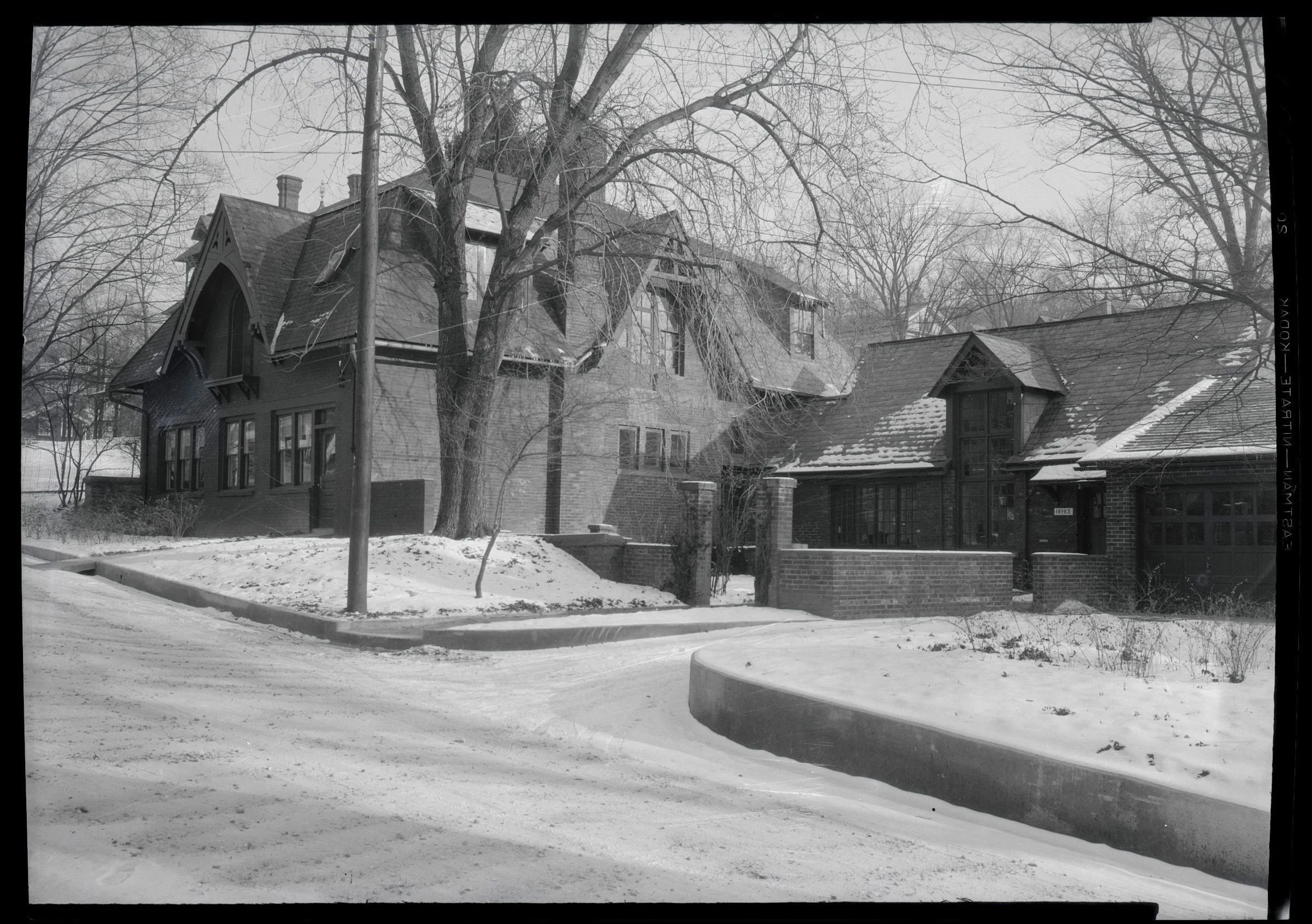
In this photograph, taken by Bailey in 1935, the Carriage House is the large two-story structure at left. The interior was modernized in the 1980s into several apartments, including one that encompasses the entire top floor, where the Carriage House Residencies will be hosted. Image courtesy of the Liberty Hyde Bailey Museum & Gardens, South Haven, Michigan.
Liberty Gardens and Greenhouse Program
With the restoration of the historic Bailey greenhouse and gardens, the Bailey Center will launch the “Liberty Gardens and Greenhouse,” an after-school program for ninth to twelfth grade students who will learn about growing food and ornamental plants year-round with instructors from Cornell Cooperative Extension Tompkins County. Working hands-on in the greenhouse and gardens of the “Father of Modern Horticulture,” students will learn about the challenges and joys of growing plants themselves, and in the spring they will receive seedlings of their own from the greenhouse to begin their own “Liberty Gardens” at home (inspired in part by the idea of “victory gardens”). Successfully grown food will become the basis of cooking lessons in the kitchen of the Bailey home, exposing students to the full cycle from plot to plate in the relatively confined area of a single home lot. Students will also learn about how plants can be grown to help cultivate justice locally, and will collaborate to determine the best ways to distribute surplus food and ornamental plants in order to benefit people in need in their own communities. Students will come away with valuable life experience and a greater appreciation for the “liberty” that comes with the power to grow one’s own food and share it with others.
Beyond this educational programming, we also hope to collaborate on original horticultural research with such potential partners as the Boyce Thompson Institute. Bailey was an early proponent of the idea that horticultural and agricultural crops ought to be derived from the native plants of the region in which they were to be grown, rather than importing our domesticated plants from other continents. He argued that this practice could lead to a more ecologically sustainable agriculture—what he called a “permanent agriculture.” We will identify partners in the plant sciences interested in forwarding this plant-breeding work today, in light of the promises it continues to hold for sustainability in agriculture. At least some of this work we hope will take place on the Bailey Center property, where our Liberty Gardens students will be able to learn from the work.
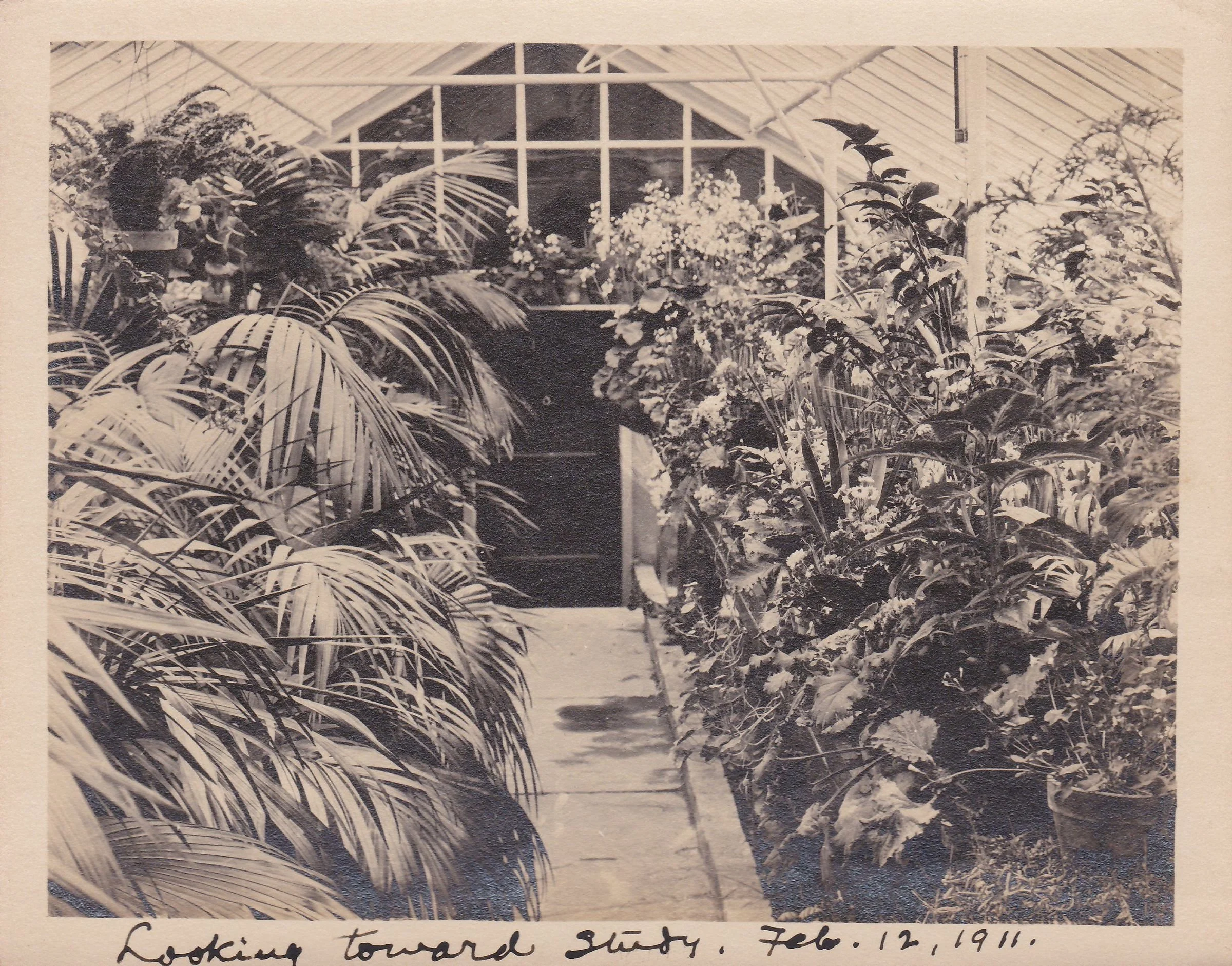
The interior of Bailey’s Ithaca greenhouse in 1911, in a photo taken by Bailey. Image courtesy of the Liberty Hyde Bailey Museum & Gardens, South Haven, MI.
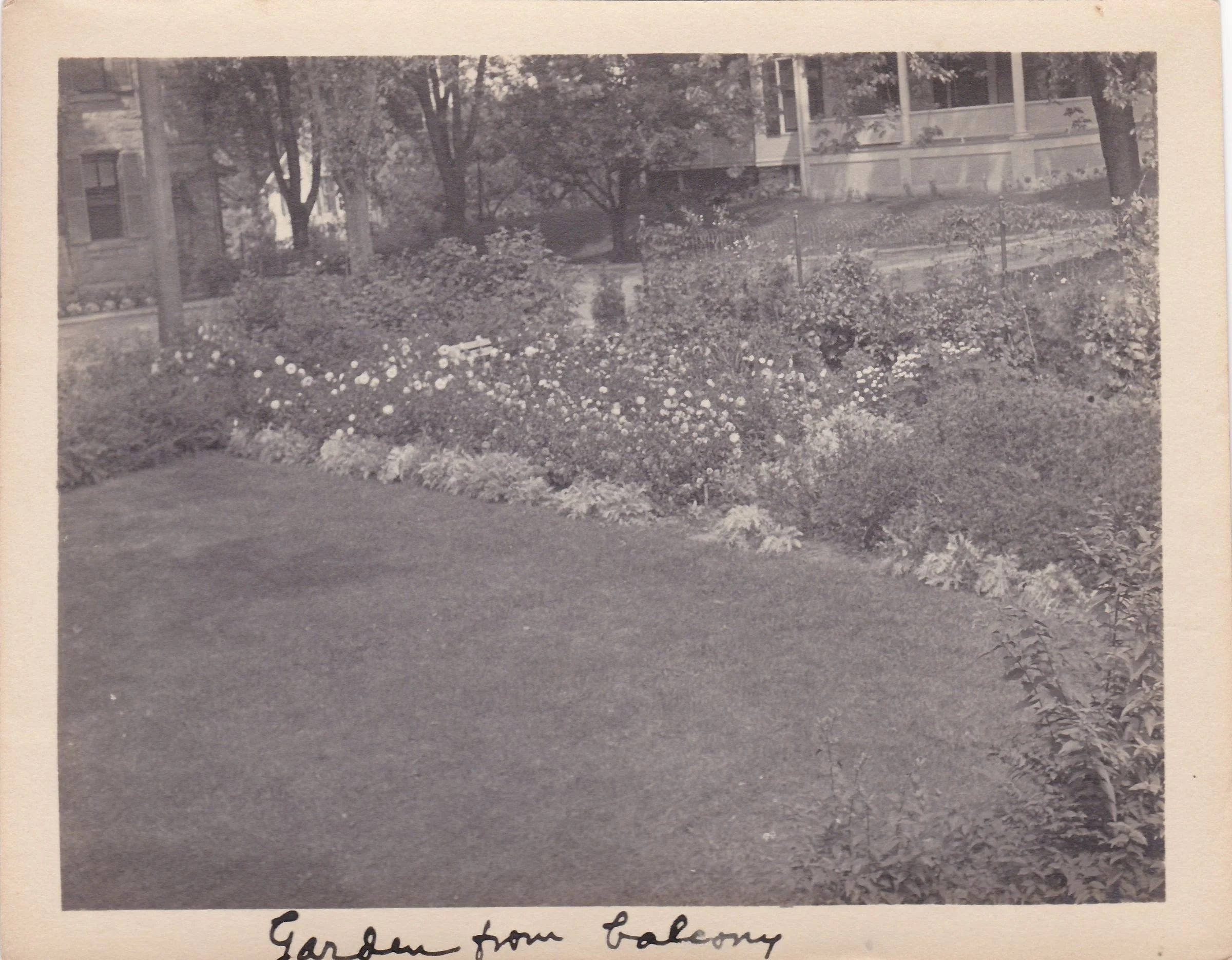
A portion of the main garden, taken from the Carriage House balcony, in a photo taken by Bailey. Image courtesy of the Liberty Hyde Bailey Museum & Gardens, South Haven, MI.
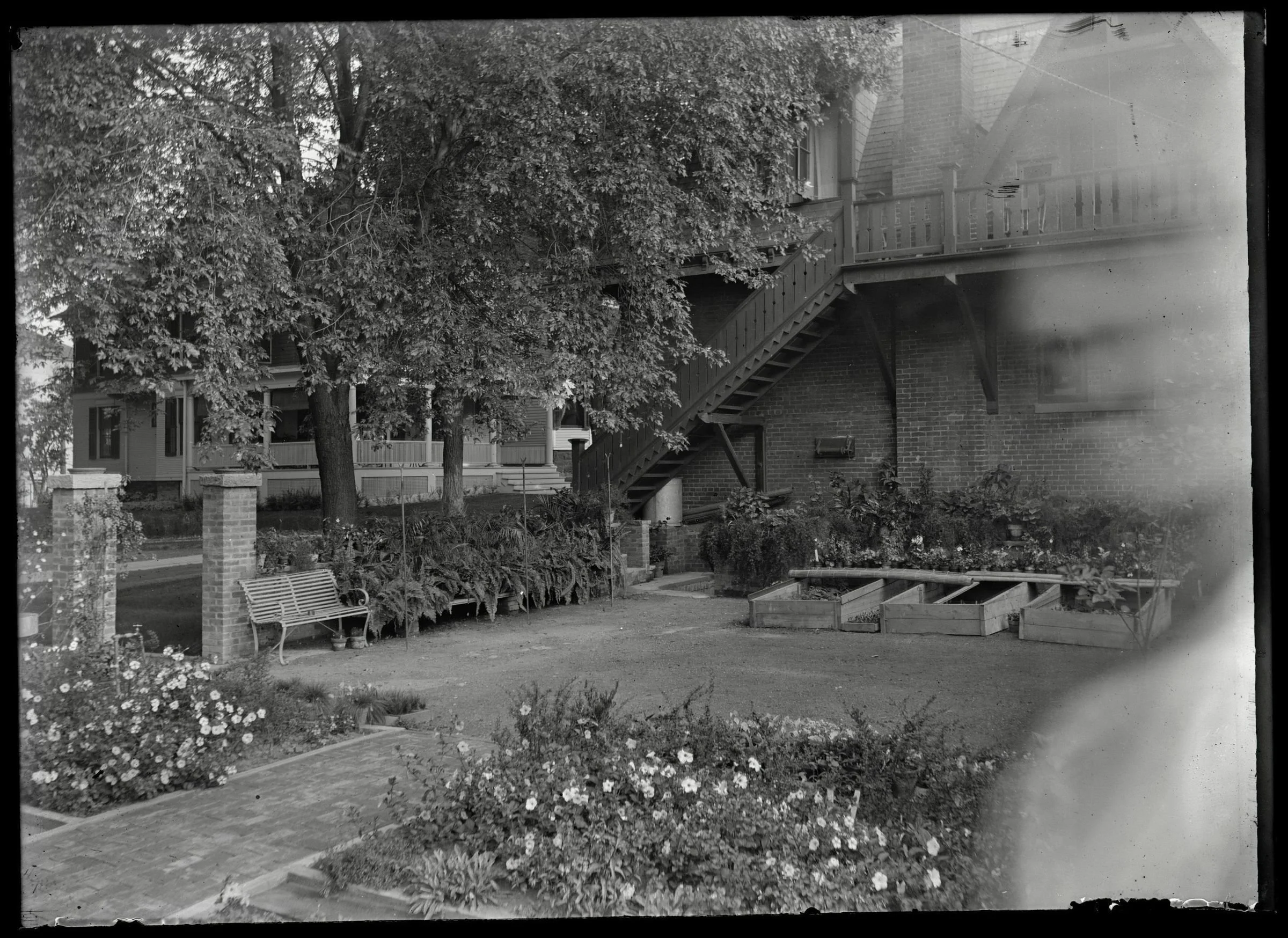
Patio gardens, with Carriage House visible in the back right, in a photo taken by Bailey featuring a double-exposure image of his face. Image courtesy of the Liberty Hyde Bailey Museum & Gardens, South Haven, MI.
Rural Humanities Project
The early concept of the Bailey Center benefitted from incubation in Cornell University’s Mellon Foundation-funded Rural Humanities initiative, which ended in the summer of 2025. The Bailey Center will now take up that initiative’s work, using “the tools of the humanities to critically approach, learn from, make visible, and support the realities of rural America, particularly in New York: its histories, cultures, challenges, and futures.” We will especially seek to deploy the public arts and humanities to make space for and support rural storytelling that can bridge divides, highlighting the diversity and richness of rural life in all its manifestations. Inspired by the Project for New York State Plays of the 1930s and ’40s, we will run a friendly statewide competition for anyone who wants to write an original play about their home place, offering to stage the finalists and tour the winning play across the state. We will solicit original poetry, fiction, nonfiction, interviews, visual art, and public history writing and scholarship, for publication in an in-house literary journal devoted to rural experience, tentatively titled Open Country. We will also seek to partner with humanities departments at colleges and universities across the state to develop pedagogy and research in the Rural Humanities, an interdisciplinary field that speaks urgently to our present political, ecological, and cultural moment.
Property Tours and Restoration
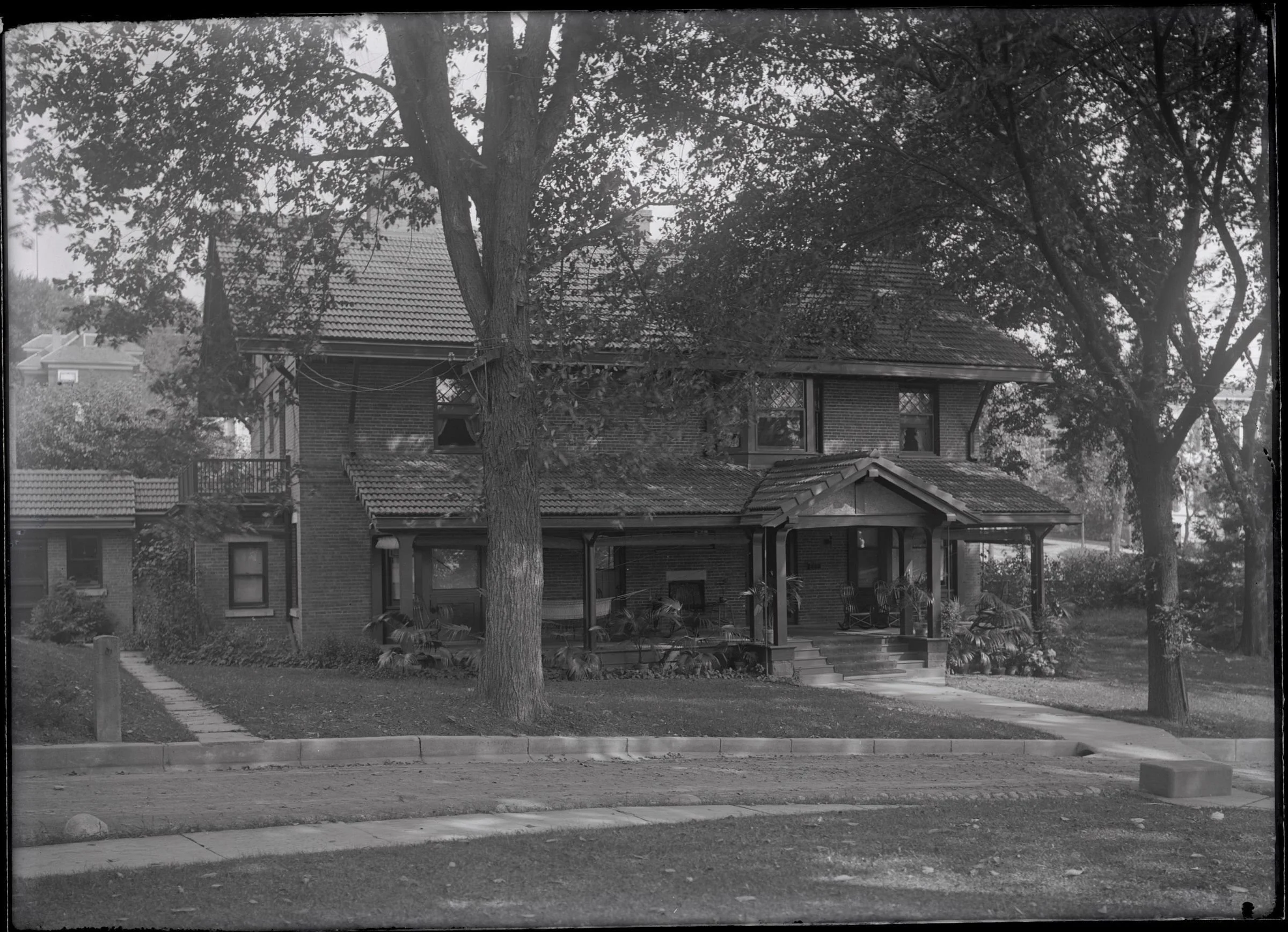
Liberty Hyde Bailey spent a great deal of time and energy thinking and writing about the ideals of home—how the cultivation of beauty in one’s home life could inspire and direct one’s entire outlook toward society and the natural world. In 1899, he was able to realize some of these ideals in his own life when he codesigned his own, craftsman-style home in Ithaca, collaborating with Cornell architect Clarence A. “Pa” Martin, on a plot just south of Henry Sage’s carriage house, horse stable, and conservatory (all designed by William Henry Miller), which Bailey also purchased. He eventually converted the horse stable into his own office and herbarium, with overflow storage in the attached carriage house, and took down Sage’s ostentatious conservatory to build his own more modest greenhouse connecting the office to the north with the house to the south, forming a continuous chain of structures through which work and home life could coexist in a seamless flow. It will be the Bailey Center’s mission to make as much of this historic site accessible to the public for educational purposes as possible, telling the historic stories of the Bailey family and their remarkable lives with an eye toward what we can learn from them and apply to the present. The house itself (103 Sage Place) has been well preserved, and will be open to tours during regular hours, led by volunteer docents, telling the stories not only of the Bailey family but also of the house’s other inhabitants—the nature-study leader Alice McCloskey, who lived with the Baileys for years; Carol Aronovici, a Romanian exchange student of Bailey’s who later became a leading expert on city planning and public housing; and the families of servants who lived with the Bailey family for many years—as well as the events that took place there, like the weekly Sunday meetings with Agriculture students who would give speeches on certain topics and listen to Dean Bailey recite his favorite poetry. The horse-stable-turned-office/herbarium, the historic interior of which has been lost but survives in photographs, will be restored to its historic state and open for tours as well, along with the greenhouse and gardens. While the Bailey Center will not be a museum, the historic property will be accessible as a forward-looking educational resource in perpetuity, and it will add to the landscape of historic and educational tourism in the greater Ithaca area.
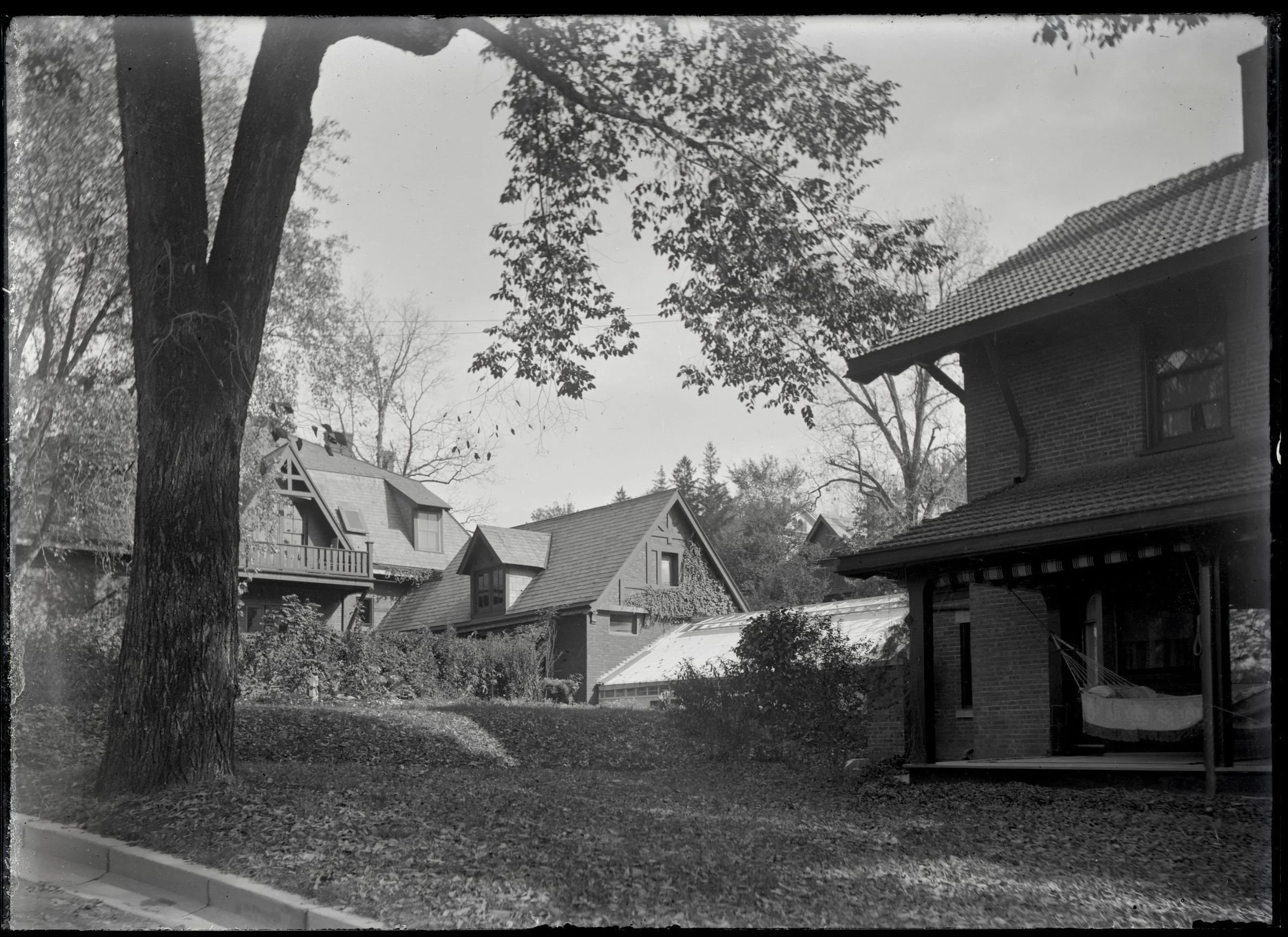
L-R: carriage house turned herbarium, horse stable turned office, greenhouse, Bailey home. All structures in good repair. Photo by Bailey, courtesy of the Liberty Hyde Bailey Museum & Gardens, South Haven, MI.
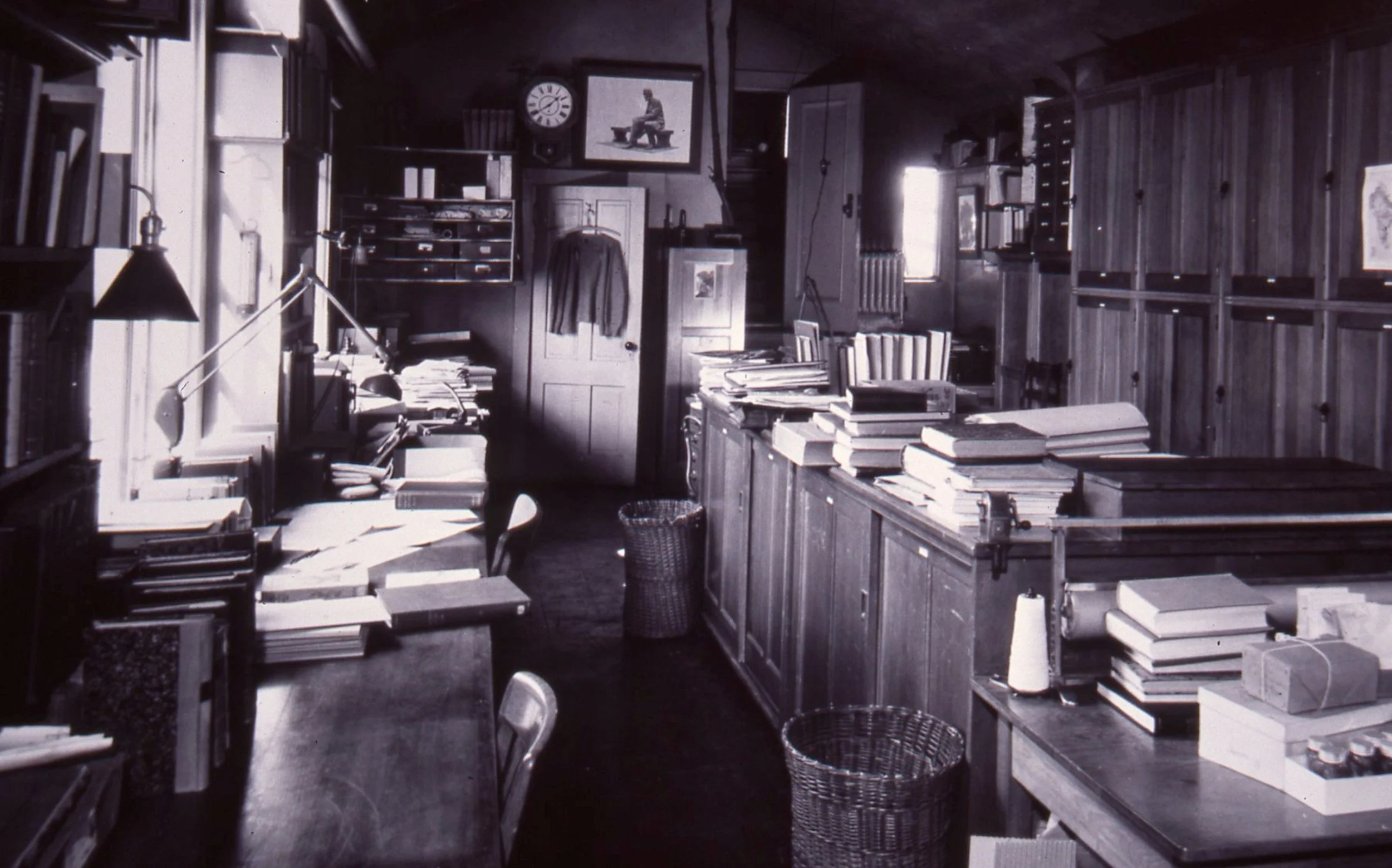
Interior of the horse stable turned office/herbarium in Bailey’s time. This interior has been modernized and is in need of restoration. The chair at the bottom-left is where Bailey wrote many books. Courtesy of the Liberty Hyde Bailey Hortorium Herbarium, Cornell University.
The home residence itself, 103 Sage Place, co-designed by Bailey and Cornell architect Clarence A. “Pa” Martin. Photo by Bailey, courtesy of the Liberty Hyde Bailey Museum & Gardens, South Haven, MI.
Bailey Center Bookshop and Reading Room
In partnership with Cornell University Press through the Liberty Hyde Bailey Library series, the Bailey Center will pursue the publication of books and other print and electronic materials making the writings and work of Liberty Hyde Bailey accessible and applying it to the challenges and opportunities of the twenty-first century. Two volumes have already been published—an anthology of Bailey’s literary garden writings called The Liberty Hyde Bailey Gardener’s Companion, and a new edition of Bailey’s educational classic The Nature-Study Idea with extensive contextual materials and related writings—and several more volumes are currently in process. The next will be The Outlook to Nature, which expands on the underlying philosophy of The Nature-Study Idea into a more comprehensive worldview and represents one of Bailey’s most ambitious literary attempts to bridge the rural-urban divide. With the establishment of the Center, the book series will also take into its purview new writings that emerge from and fuel events related to the Rural-Urban Dialogue Initiative and the Whole Earth Democracy Series, publishing edited anthologies and possibly monograph-length works. The Center will also put out pamphlets, white papers, chapbooks, the Open Country journal described above, and more.
All of these will be available for perusal and purchase in the Bailey Center Bookshop, set up in the parlor of the Bailey home, just to the right of the main hall that a visitor enters on arriving. Beyond the main hall and parlor is the living room, dominated by a generous fireplace and featuring built-in bookshelves lining every wall that once housed the Bailey family library. Many of those books, which belonged to Bailey and his family members, were saved by individuals now partnering on the Bailey Center Project, and they will be donated and returned to these shelves. But the greater bulk of the family library, over a thousand volumes, were donated to the Liberty Hyde Bailey Museum in Michigan and reside there, so the bookshelves of the living room will now be filled in with copies of all of the books Bailey wrote (around 70) and edited (over 150) and a growing library of historic and contemporary books that speak to the many fields of work in which the Bailey Center will be engaged, including books by authors whom the Center will host.
The Center will also host seasonal book studies open to members of the community, including studies of books by authors whom the Bailey Center brings in to participate in event series or residencies. These and similar contemporary books will also be on sale in the Bookshop.
Agrarian Away Program
Every June, a group of undergraduate college students from across the country will take over the three modernized three-bedroom apartments in the Carriage House (the only structure that was modernized as apartments and that will be retained as such) for an intensive, month-long study-away course. Rooted in a diverse and multicultural curriculum in the interdisciplinary field of “critical agrarian studies,” the Agrarian Away course of study will blend literary and experiential learning. Students will read a wide and interdisciplinary range of historic and contemporary texts, sitting for daily class discussions and producing regular written responses, and will engage hands-on experiences on local farms, cideries, and direct-to-consumer markets, all with the goal of situating modern food systems into a longer history and into the landscape of climate justice concerns today. Days will end at the other side of the property, in the Bailey home after public hours have ended, where the students will cook communally in the shared kitchen and sit around the porch and fireplace to make music, share poetry, and unpack the day’s lessons. The Agrarian Away Program, as an alternative or supplement to study-abroad options, will provide an education in “homecoming,” inspired by similar programs like the Berry Center’s Farm and Forest Institute, situating students’ ambitions within the scope of place, ecology, and culture to open new possibilities. Graduates will leave with a new hold on their ability to cocreate a more just and humble future. The Agrarian Away program is also the initiative through which the Bailey Center will pilot many of the pedagogical concepts of the Rural Humanities Project, and it will allow the Center to develop its philosophical ideals in a concentrated and sustained way.
Nature-Study at Bailiwick
About seven miles northwest of the Bailey Center, on a bluff overlooking Cayuga Lake in the Town of Ulysses, stands Bailiwick, a fieldstone farmhouse surrounded by the lake-facing portion of what was once Liberty Hyde Bailey’s hobby farm and summer home. This portion of the property he donated to the Girl Scouts to become the south end of Camp Comstock, founded by and named after Bailey’s close colleague and nature-study champion Anna Botsford Comstock. The Girl Scouts continue to operate the camp to this day.
The Girl Scouts of NYPENN Pathways have indicated interest in renting the Bailiwick end of the property, which stands unoccupied for most of the year, to the Bailey Center for use in outdoor educational programming and other events. The Bailey Center will host a variety of nature-study programming out at the Bailiwick property, including classes that extend westward into the trails of the Cayuga Nature Center (which are open to the public), led by naturalists from Cornell Cooperative Extension Tompkins County. These classes will seek to fill local gaps, and may include a children’s summer day camp, Spanish-language classes in the style of Primitive Pursuits, and programming related to remnant orchard revitalization. One of the initiative’s signature programs will be the restoration of the only remaining remnant orchard associated with Liberty Hyde Bailey, where living trees likely grafted by Bailey himself still stand some hundred and twenty-five years later. We hope to partner with Camp Comstock to make this into a sort of community orchard, where members can learn to help care for the trees and then enjoy the harvest.
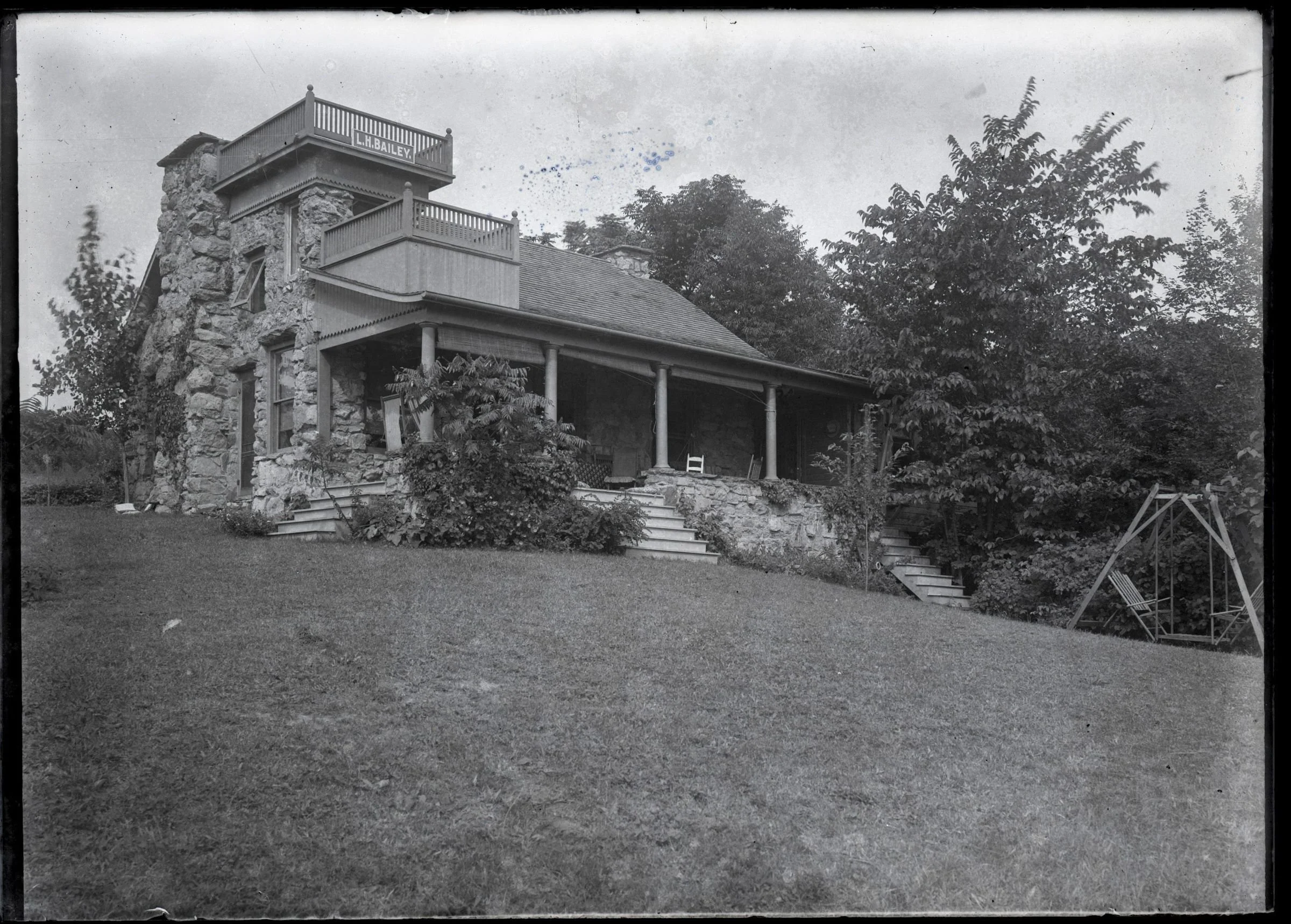
The front of the cottage at Bailiwick, now owned by Girl Scout Camp Comstock. Photo by Bailey, courtesy of the Liberty Hyde Bailey Museum & Gardens, South Haven, MI.
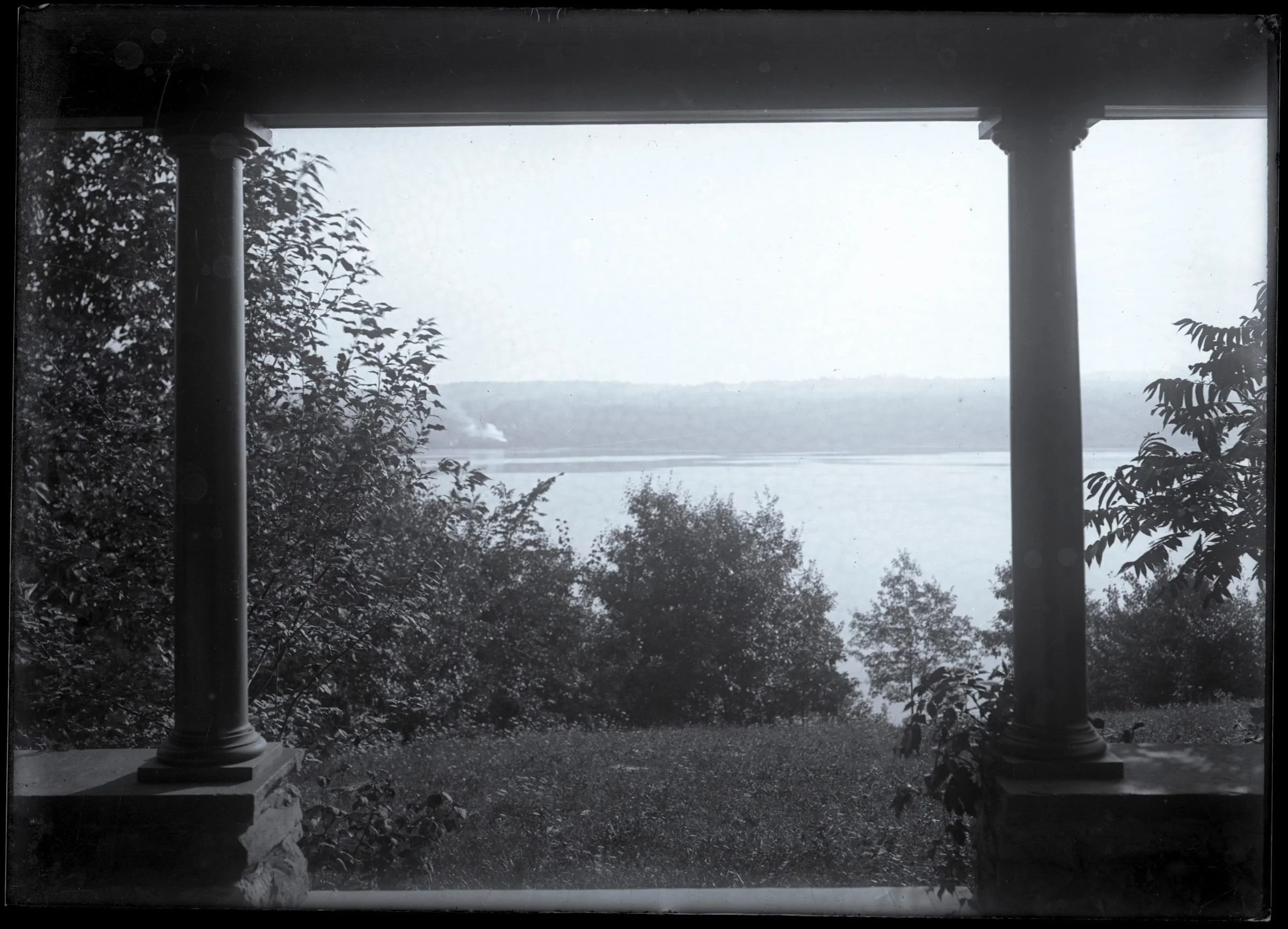
Cayuga Lake, viewed from the front porch at Bailiwick. Photo by Bailey, courtesy of the Liberty Hyde Bailey Museum & Gardens, South Haven, MI.
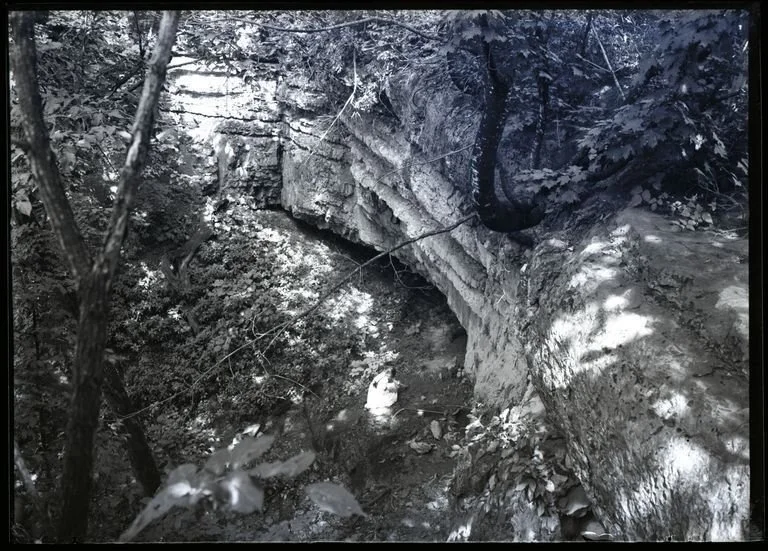
One of the gorges at Bailiwick, with one of Bailey’s daughters playing at the bottom. Photo by Bailey, courtesy of the Liberty Hyde Bailey Museum & Gardens, South Haven, MI.
Bailey Block Party
Part of the work of civic revitalization is the cultivation of spaces where neighbors can come together and loosen up. Once a year, in partnership with the City of Ithaca and the Ithaca Visitors Bureau, the Bailey Center will shut down the one-block square loop of Sage Place and fill it with vendors and booths showcasing the diverse cultural, ecological, and foodways resources of the greater Ithaca area. Tours of the Bailey property will be ongoing, and an outdoor main stage will feature a curated rotation of local music and poetry performances in a celebration of Ithacan history and community, with a special emphasis on the region’s agricultural heritage. Think Farm Aid mixed with the hyper-locality of a small-town harvest festival, and packed with neighbors who can use another excuse to see each other more often. Shuttle buses will run from a downtown municipal parking garage up the hill to Sage Place for those who do not live within walking distance in the neighborhood. The Bailey Block Party will be one more way that the Center remains firmly rooted in place and giving back to its community.